Digital Truck Advertising: Why LED Box Trucks Are Changing Outdoor Marketing
What if your advertisement could travel directly to the people you want to reach instead of waiting for them to drive past the same billboard every day? That is the idea behind box truck advertising, a flexible form of outdoor marketing that turns commercial vehicles into highly visible mobile advertising platforms.
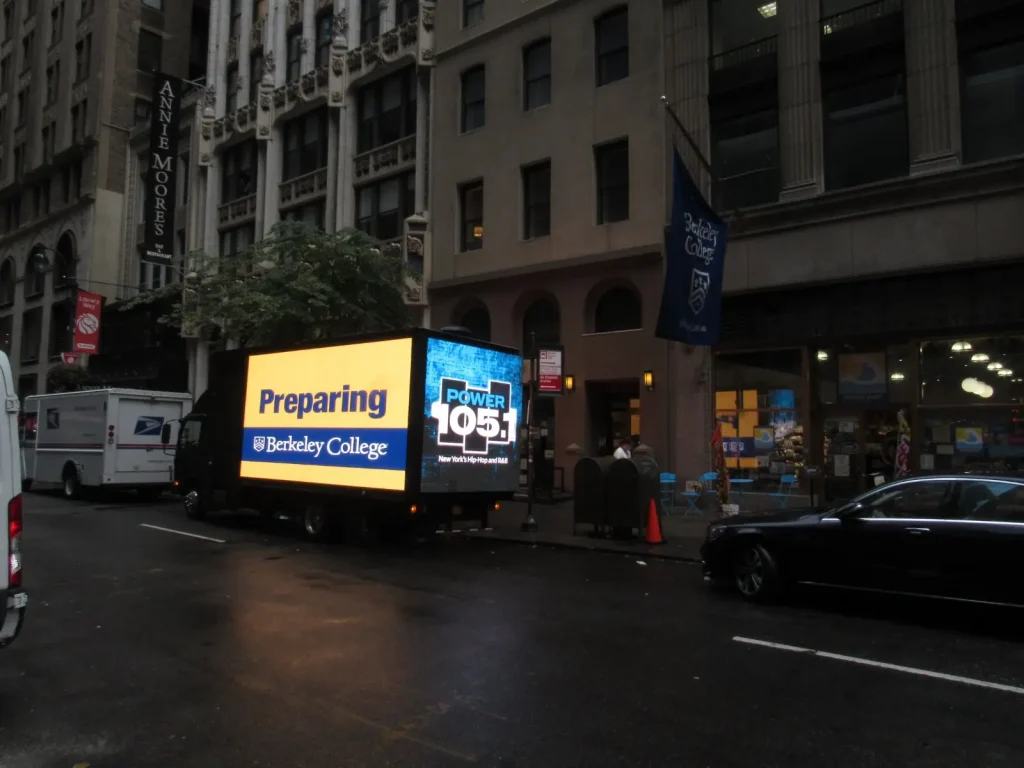
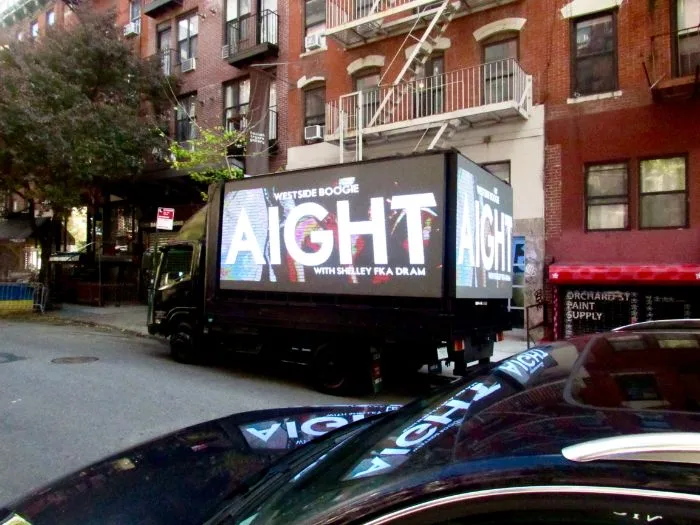
Traditional billboards and vehicle wraps have been used for years to build brand awareness. But digital technology is changing what mobile advertising can do. LED box trucks combine the mobility of a truck with the visual impact of a digital display, allowing businesses to present dynamic messages, videos, promotions, announcements, and branded content in high-traffic locations.
For businesses looking for a way to stand out in increasingly crowded advertising environments, this combination can offer a powerful alternative to static outdoor advertising.
At National Led Billboards, we understand that outdoor advertising works best when a message is visible, memorable, and placed where the right audience can see it. LED box trucks take that concept a step further by bringing the advertising directly into the streets, events, neighborhoods, and commercial areas where audiences already spend their time.
What Is Box Truck Advertising?
Box truck advertising is an outdoor advertising strategy that uses the large exterior surface of a box truck to display a company’s branding, promotional message, product information, or advertising campaign.
A standard box truck already provides a large rectangular advertising surface. Instead of allowing that space to remain unused, businesses can transform it into a mobile billboard.
There are two primary approaches:
- Static box truck advertising using printed wraps or graphics
- Digital box truck advertising using LED screens
A static wrap essentially turns the truck into a moving poster. It can display a logo, slogan, product image, phone number, website, or other brand information.
An LED box truck, however, can display changing digital content. That means advertisers are not limited to a single creative design.
For example, a restaurant could promote lunch specials during the day, advertise dinner offers in the evening, and run a seasonal promotion during a weekend event.
A retail company could promote a new product one week and switch to a limited-time sale the next without replacing a physical wrap.
This flexibility is one of the major reasons LED technology is becoming increasingly interesting for outdoor marketing.
Why Does Box Truck Advertising Get Attention?
Size and movement are two major advantages.
People encounter advertising everywhere: on websites, social media platforms, mobile devices, storefronts, radio, television, and roadside signs. Because audiences are exposed to so many messages, advertisers need ways to interrupt that routine without becoming intrusive.
A moving truck naturally enters different environments throughout the day.
It may travel through:
- Busy city streets
- Shopping districts
- Business centers
- Residential neighborhoods
- Entertainment areas
- Sporting events
- Concert venues
- Trade shows
- Festivals
- Special events
- High-traffic intersections
Instead of relying on one fixed location, a mobile advertising vehicle can bring a campaign to multiple locations.
With an LED display, the message can also change based on the campaign, time of day, event, or location.
That creates a combination of mobility, visibility, and flexibility that traditional static advertising cannot always provide.
LED Box Trucks vs. Static Wraps: What’s the Difference?
Both LED box trucks and static wraps fall under the broader category of mobile outdoor advertising, but they work differently.
A static wrap uses printed graphics applied to the truck. The design remains essentially the same throughout the campaign.
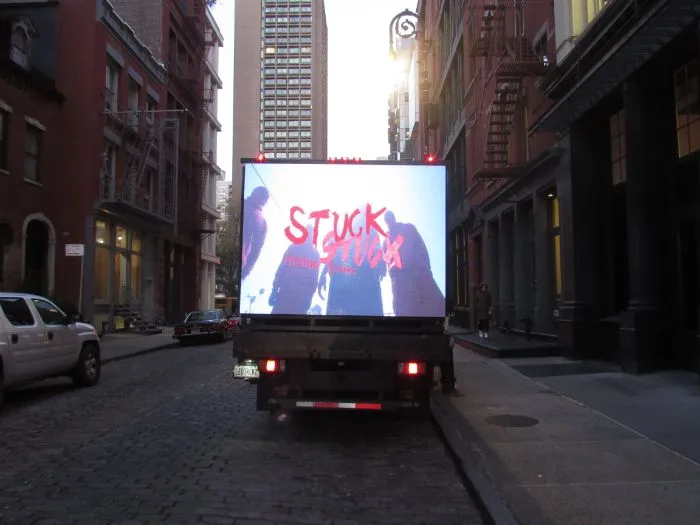
An LED box truck uses a digital display to present advertising content electronically.
Here is a simple comparison:
| Feature | Static Wrap | LED Box Truck |
| Content | Fixed | Digital and changeable |
| Creative Updates | Require new graphics | Can be updated digitally |
| Video | No | Yes |
| Multiple Advertisers | Limited | Possible |
| Time-Based Messaging | Limited | Yes |
| Event-Specific Content | Requires new materials | Easy to change |
| Visual Movement | Vehicle movement | Vehicle + digital content |
| Campaign Flexibility | Moderate | High |
Static wraps can still be effective. They provide constant branding and can work well for businesses that want a straightforward message.
However, LED displays provide a different level of creative flexibility.
The Power of Dynamic Content
Imagine a truck driving through a business district during the morning commute.
Instead of showing the same message all day, the LED screen could display:
Morning: “Start Your Day With Fresh Coffee.”
Afternoon: “Lunch Specials Available Today.”
Evening: “Dinner Reservations Open.”
The physical vehicle has not changed. The advertising strategy has.
This ability to deliver different messages throughout the day can help businesses make their campaigns more relevant.
LED advertising can also incorporate motion, graphics, animations, and other visual elements that are difficult or impossible to reproduce with a conventional printed wrap.
Of course, movement should support the message rather than distract from it. Good outdoor advertising is usually simple, readable, and fast to understand.
The goal is not to put an entire website on the side of a truck.
The goal is to make someone look, understand, and remember.
Where Box Truck Advertising Works Best
One of the biggest advantages of box truck advertising is its ability to operate in multiple environments.
However, mobility does not automatically guarantee results. Campaign planning still matters.
The best locations depend on the target audience, campaign objective, time of day, and type of business.
1. High-Traffic Urban Areas
Dense urban environments can provide strong visibility because large numbers of pedestrians, drivers, commuters, and passengers may encounter the vehicle.
Businesses targeting local consumers can use mobile advertising to increase brand exposure throughout important commercial areas.
2. Shopping and Retail Districts
Retailers can use LED box trucks to promote sales, new products, grand openings, or seasonal campaigns near shopping areas.
For example, a clothing retailer launching a new collection could use mobile digital advertising around nearby shopping districts.
3. Sporting Events
Sports venues create concentrated audiences and high-energy environments.
LED box trucks can be positioned or routed around event areas to support campaigns connected to:
- Team promotions
- Sponsorships
- Product launches
- Restaurants
- Local businesses
- Community campaigns
The visual nature of LED advertising can also complement the excitement surrounding major events.
4. Concerts and Festivals
Music festivals, community events, fairs, and entertainment districts can create valuable opportunities for mobile advertising.
Brands can create event-specific messaging rather than relying on generic advertisements.
That can make the campaign feel more connected to its environment.
5. Product Launches
A product launch is all about visibility.
Instead of waiting for potential customers to encounter a new product online, businesses can bring the announcement into the physical world.
A mobile LED display can promote a product across multiple areas while building familiarity with the brand.
6. Local Service Areas
Businesses such as restaurants, retailers, entertainment companies, and service providers can use mobile advertising to build awareness within specific geographic markets.
The ability to move the advertising vehicle can be particularly useful for companies expanding into new neighborhoods or markets.
How Box Truck Advertising Compares to Other OOH Channels
Out-of-home advertising, commonly called OOH advertising, includes many formats such as billboards, transit advertising, street furniture, posters, digital signs, and vehicle advertising.
So where does box truck advertising fit?
The biggest difference is mobility.
A traditional billboard remains in one location. That can be beneficial because it provides repeated exposure to people who regularly travel that route.
However, the audience is largely determined by the billboard’s fixed location.
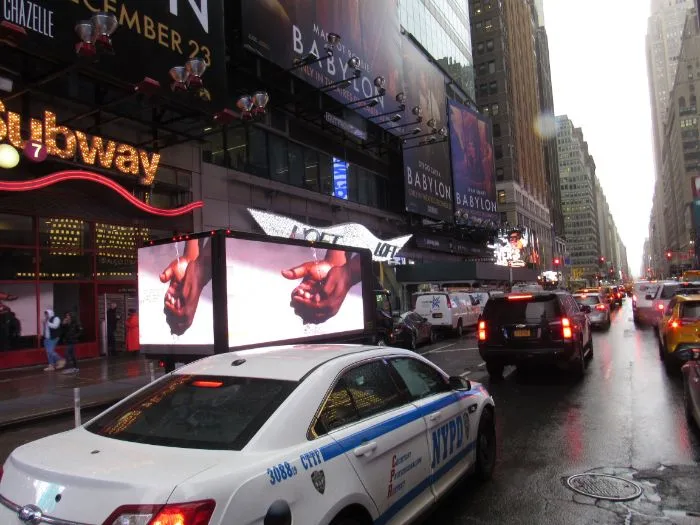
A box truck can move.
That means a campaign can potentially reach different audiences throughout the day.
Box Truck Advertising vs. Traditional Billboards
Traditional billboards are powerful for establishing a consistent presence in a particular location.
Box truck advertising offers greater geographic flexibility.
For example, a campaign could move between a downtown business district in the morning, a retail area during the afternoon, and an entertainment district in the evening.
Box Truck Advertising vs. Transit Advertising
Transit advertising can include buses, trains, taxis, and other forms of transportation.
Like box trucks, transit advertising benefits from mobility.
However, box trucks can offer a large dedicated advertising surface and can be strategically routed around specific areas or events.
Box Truck Advertising vs. Static Vehicle Wraps
Vehicle wraps are essentially mobile billboards with fixed creative.
They are excellent for long-term brand exposure.
LED box trucks add another layer: digital flexibility.
Advertisers can change content without physically replacing the advertising surface.
Box Truck Advertising vs. Digital Billboards
Digital billboards provide dynamic advertising content and excellent visibility.
Their main limitation is that they remain fixed.
LED box trucks combine digital messaging with mobility.
That makes them particularly useful for campaigns that need to reach different locations rather than one specific intersection.
What to Look for in a Box Truck Advertising Provider
Choosing the right provider is just as important as creating a good advertisement.
A great campaign can underperform if the vehicle is poorly maintained, the display is difficult to see, or the campaign is not properly planned.
Before choosing a provider, consider several factors.
High-Quality LED Displays
The display should provide clear, bright, readable content suitable for outdoor environments.
Ask about display quality, visibility, maintenance, and how the screen performs in different lighting conditions.
Reliable Vehicles
The truck is the foundation of the campaign.
A professional provider should maintain its vehicles properly and have processes for dealing with maintenance or unexpected issues.
Strategic Routing
Ask how routes are selected.
A good provider should understand that simply driving around randomly is not the same as executing a targeted outdoor advertising campaign.
The route should align with the campaign’s audience and objectives.
Campaign Flexibility
Digital advertising should provide flexibility.
Ask whether creative can be updated during the campaign and whether different messages can be scheduled for different times or locations.
Creative Support
Not every business has an experienced outdoor advertising designer.
A provider that understands digital outdoor advertising can help ensure that content is readable and effective from a distance.
Remember the basic rule: people may only have a few seconds to see your advertisement.
Your message needs to work quickly.
Reporting and Campaign Visibility
Ask what type of campaign reporting is available.
Depending on the provider and campaign structure, reporting may include information about routes, campaign duration, scheduled appearances, or other performance indicators.
Clear communication helps advertisers understand how their campaign is being delivered.
How to Create an Effective LED Digital Truck Advertisement
Having a large LED screen does not mean you should fill every inch with information.
In fact, too much information can make an outdoor advertisement harder to understand.
A strong LED box truck advertisement should generally focus on one primary message.
Keep the Headline Short
Use a headline that can be understood quickly.
Instead of:
“Visit Our Restaurant Today to Take Advantage of Our Wide Variety of Delicious Food Options and Special Menu Items”
Try:
“Dinner Starts Here.”
Then add a short supporting message and a clear call to action.
Make the Brand Obvious
People should not have to guess who the advertisement is for.
Include the company name or logo prominently.
Use Strong Visuals
Images should support the message rather than compete with it.
Product photography, simple graphics, bold typography, and short animations can work well when designed for outdoor viewing.
Include One Clear CTA
Tell the viewer what to do next.
Examples include:
- Visit Us Today
- Call Now
- Shop Online
- Book Today
- Scan the QR Code
- Visit Our Store
Do not give viewers five different instructions.
One strong action is usually easier to remember.
Getting Started with Digital Truck Advertising
Starting a box truck advertising campaign does not need to be complicated.
The first step is identifying what you want the campaign to accomplish.
Are you trying to build brand awareness?
Promote an event?
Launch a product?
Drive local traffic?
Promote a limited-time offer?
Enter a new market?
Your objective should influence the creative, route, timing, and campaign strategy.
Step 1: Define Your Audience
Determine who you want to reach.
Consider factors such as:
- Location
- Age group
- Consumer behavior
- Business type
- Event attendance
- Commuting patterns
- Purchasing interests
The more clearly you define your audience, the easier it becomes to plan an effective campaign.
Step 2: Choose Your Campaign Message
Develop one central message.
If your campaign requires a paragraph to explain, it may need to be simplified.
Outdoor advertising is about quick communication.
Step 3: Select the Right Creative Format
Decide whether a static wrap or LED display makes more sense for your campaign.
If your message needs frequent updates, multiple creatives, video, or time-sensitive promotions, an LED box truck may provide greater flexibility.
Step 4: Plan the Route
Choose locations based on your target audience.
A campaign aimed at office workers may need a different route from one targeting families, tourists, students, or sports fans.
Timing matters too.
A location that is busy at 8 a.m. may be very different at 8 p.m.
Step 5: Launch and Monitor
Once the campaign starts, monitor delivery and performance where possible.
Look for signs of increased awareness, website traffic, calls, store visits, event attendance, or other campaign-specific outcomes.
Outdoor advertising should not operate in isolation.
For stronger results, consider connecting your box truck campaign with your other marketing channels.
For example, an LED advertisement might promote a landing page, social media campaign, event, QR code, or special offer.
This creates a bridge between offline visibility and online engagement.
Why LED Digital Trucks Are Changing Outdoor Marketing
The outdoor advertising industry has always depended on visibility.
But modern audiences expect more than a static message.
They are accustomed to digital screens, changing content, video, personalization, and real-time communication.
LED box trucks bring some of those digital capabilities into the physical environment.
They provide advertisers with the ability to move, update, adapt, and experiment.
That does not mean traditional billboards or vehicle wraps are obsolete. Far from it. Each OOH format has its own strengths.
The real opportunity is choosing the format that matches the campaign.
For brands that need mobility and dynamic content, LED box trucks offer an especially compelling combination.
They can transform ordinary streets into moving advertising environments while helping businesses put their message in front of audiences where they already live, work, shop, commute, and gather.
At National Led Billboards, the goal is to help businesses make outdoor advertising more visible, flexible, and engaging through digital LED technology.
If your next marketing campaign needs to go beyond a fixed advertising location, box truck advertising may be worth considering. With the right creative, route strategy, timing, and provider, an LED box truck can turn a moving vehicle into a powerful extension of your brand.
Frequently Asked Questions (FAQ’s)
1. What is Digital truck advertising?
Box truck advertising uses the large exterior surface of a box truck as a mobile advertising platform. Advertisements can be printed as static graphics or displayed digitally using LED screens.
2. What is an LED Digital truck?
An LED box truck is a mobile advertising vehicle equipped with one or more digital LED displays. These screens can show changing advertisements, graphics, animations, videos, promotions, and other digital content.
3. Is Digital truck advertising effective for local businesses?
Box truck advertising can be useful for local businesses because it allows campaigns to reach audiences across multiple geographic areas. Businesses can target commercial districts, events, shopping areas, and other locations relevant to their customers.
4. Can the advertising on an LED box truck be changed?
Yes. One of the major advantages of LED box truck advertising is the ability to change digital content without replacing a physical wrap. This can make it easier to promote different offers, events, products, or messages.
5. How do I start an LED box truck advertising campaign?
Start by defining your target audience and campaign objective. Then select your advertising message, creative format, target locations, campaign schedule, and advertising provider. A professional provider can help with vehicle selection, routing, creative requirements, and campaign execution.